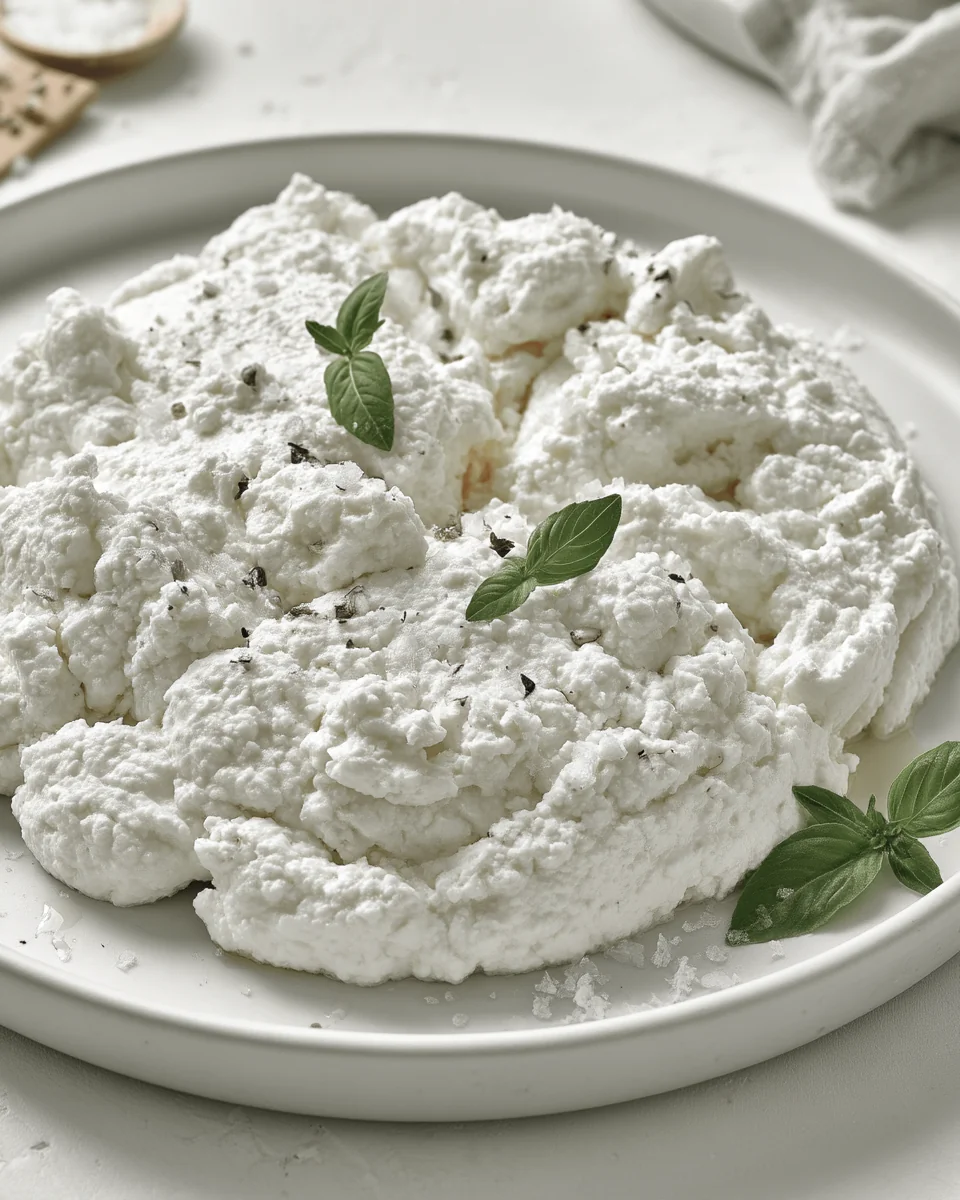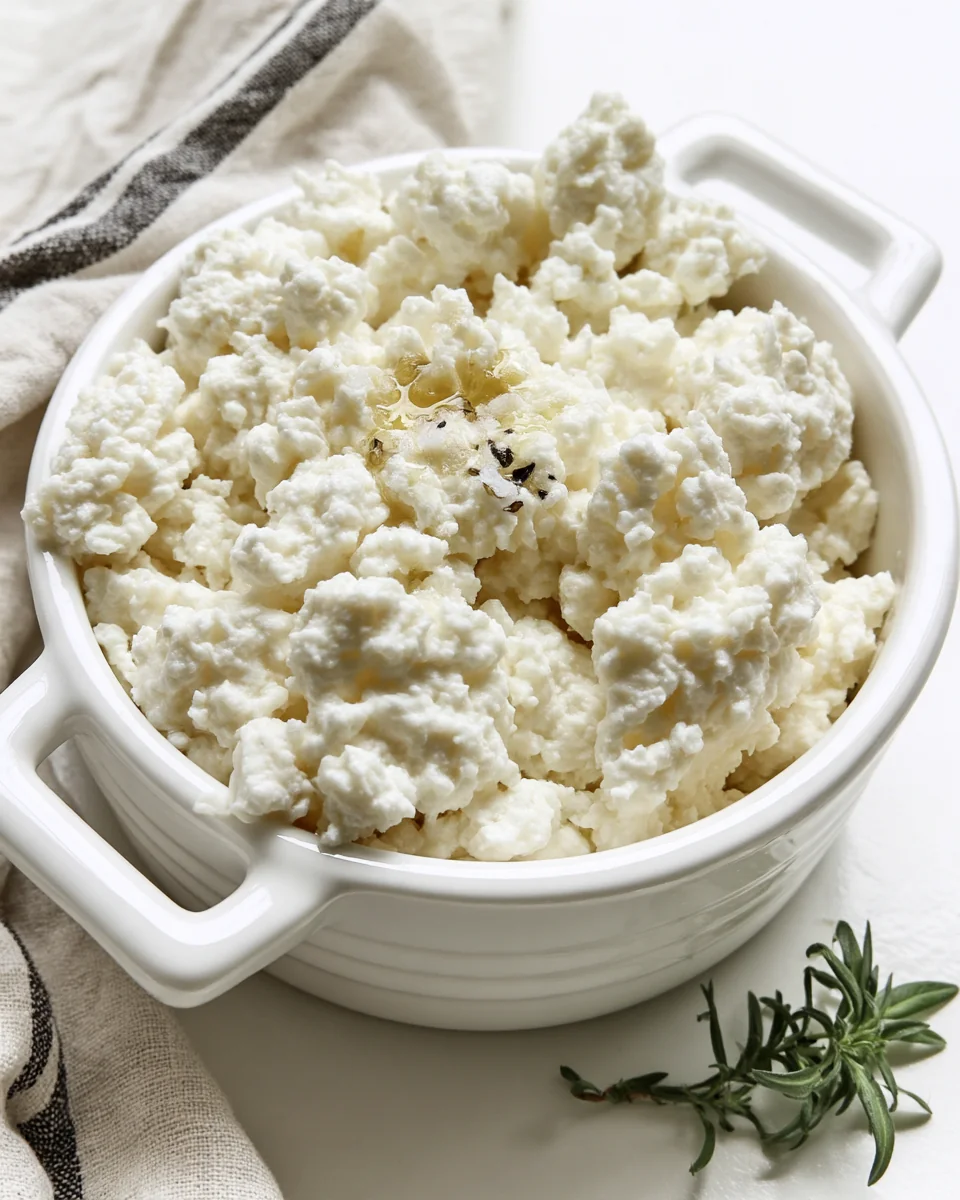
Whole Milk Ricotta Cheese is creamy, rich, and perfect for spreading on toast or dolloping on pasta. It has a delicate texture that adds a homemade touch to any dish. You'll find yourself reaching for this fresh cheese whether for breakfast, lunch, or dinner, pairing beautifully with both sweet and savory flavors.
What sets this version apart is the use of whole milk with just the right acidity from vinegar or lemon juice. Many recipes call for low-fat milk, which can result in a grainy texture. Using whole milk ensures a smooth, creamy ricotta that’s far superior. Plus, it takes just 30 minutes from start to finish!
Why You'll Love This Recipe
- Creamy texture — Whole milk delivers a richness and smoothness that low-fat alternatives can't match.
- Quick and simple — With only two ingredients and a few steps, you can have fresh ricotta ready in under 30 minutes.
- Versatile uses — This ricotta is delicious on toast, in lasagna, or mixed into desserts like cheesecake.
- Cost-effective — Making ricotta at home is cheaper than buying it in store, saving you money without sacrificing quality.
Ingredients & Substitutions
Serves 8
For the Ricotta
- 8 cups whole milk — provides the creaminess essential for good ricotta; avoid low-fat for best results.
- 3 tablespoons white vinegar (or lemon juice) — this acidity is crucial for curdling the milk; don’t swap for flavored vinegars, as they can alter the taste.
How to Make Whole Milk Ricotta Cheese
Step 1: Heat the Milk
In a large pot, add the 8 cups of whole milk and 3 tablespoons of white vinegar. Stir well to combine, then bring the mixture to a boil over medium heat. Watch closely; you need to see big bubbles and a milky froth forming. This should take about 5-7 minutes.
Step 2: Separate the Curds and Whey
Once boiling, remove the pot from the heat. You'll notice the curds and whey beginning to separate. Let it sit for 20 minutes. During this time, the curds will form small clumps, making it easy to strain.
Step 3: Strain the Ricotta
Place a large strainer over a bowl or the sink and line it with cheesecloth. Gently pour the curds and whey mixture into the strainer. Be careful—let the curds collect while the whey drains out below.
Step 4: Drain to the Desired Consistency
Allow the ricotta to strain for 5 to 10 minutes. The longer it drains, the firmer it will become. If you prefer a smoother texture, check it at the 5-minute mark. You want it to retain some moisture without being wet.
Step 5: Store or Use
Once drained, transfer the ricotta to a container. You can use it right away or refrigerate it in an airtight container. It will keep for up to 1 week, but for the best taste and texture, enjoy it within a few days.
How to Serve Whole Milk Ricotta Cheese
Whole milk ricotta cheese is a versatile ingredient that can shine in many dishes. Whether you spread it on freshly baked bread or use it in savory or sweet recipes, the creamy texture and rich flavor elevate any meal. Here are some serving ideas and accompaniments to make the most of your homemade ricotta.
Serving Ideas
- Serve at Room Temperature — Allow ricotta to come to room temperature, about 30 minutes after refrigeration, to enhance its creaminess and flavor profile.
- Use a Shallow Bowl — Present the cheese in a wide, shallow bowl to increase the surface area, allowing guests to scoop their share easily without losing that delightful texture.
- Pair with Fresh Herbs — Top with a sprinkle of chopped fresh herbs like basil or chives for a fragrant addition that adds color and enhances flavor, especially when served as an appetizer.
- Enjoy with a Drizzle of Honey — Serve with a light drizzle of honey for a sweet contrast. It’s best when the honey is warmed slightly, making it easier to pour and blend with the ricotta.
What to Serve Alongside
- Crusty Bread — Its chewy texture contrasts beautifully with the smooth creaminess of ricotta, providing a satisfying bite.
- Roasted Vegetables — The caramelized sweetness of roasted vegetables balances the rich texture, adding a fulfilling depth to the dish.
- Fresh Berries — Sweet-tart berries like strawberries or blueberries provide a refreshing acidity that cuts through the richness, refreshing the palate.
- Balsamic Glaze — A tangy balsamic reduction brings a sharp contrast that complements the creaminess perfectly, enhancing the ricotta's natural flavors.
- Grilled Peaches — The warm, juicy texture of grilled peaches offers a delightful sweet contrast that pairs wonderfully with the ricotta's smoothness.
- Dark Chocolate Shavings — The bitterness of dark chocolate creates a luxurious combination with the sweet flavors of the ricotta, perfect for dessert.
 Pin it
Tips for the Best Whole Milk Ricotta Cheese
Making the perfect whole milk ricotta cheese is straightforward, but a few tips can help ensure success every time. Here are some insights to keep in mind.
- Use Fresh Whole Milk — Fresh milk is essential for achieving that rich, creamy flavor. Opened milk that's close to its sell-by date will not yield the best results, as the acidity may be off balance.
- Monitor the Boil — Bring the milk and vinegar to a rolling boil. If you see curds and whey separating too soon, your heat may be too high, which can lead to a grainy texture instead of a creamy finish.
- Cool Before Straining — Let the mixture cool for 20 minutes after boiling. This prevents the ricotta from becoming dry and ensures it retains a creamy consistency when strained.
- Align Straining Time with Desired Texture — Strain for at least 5 minutes, or up to 10 minutes for thicker ricotta. Check for the desired thickness before removing it from the strainer.
- Do Not Skip the Vinegar — The acidity of vinegar or lemon juice is crucial for curd formation. Without it, you won't see the distinct separation of curds and whey, and your ricotta may be too runny.
- Taste and Adjust — After straining, taste your ricotta and add a pinch of salt. This enhances the flavor and balances the richness, making it more flavorful in either sweet or savory dishes.
- Store Properly — Refrigerate the ricotta in an airtight container. For the best taste and texture, aim to use it within the first few days after making.
How to Store Whole Milk Ricotta Cheese
Refrigerate whole milk ricotta cheese in an airtight container for up to 1 week. This keeps the ricotta fresh and helps prevent any undesirable odors from other foods in the fridge from affecting its flavor. It’s best to consume it within the first few days for optimal taste and texture.
Refrigerator
- Keeping time: Up to 1 week for best quality.
- Container: Use an airtight container to seal in moisture.
- Signs of spoilage: Look for an off smell or color change, indicating it has gone bad. If it has a watery layer on top, it can be stirred back in, but discard if it smells bad.
Freezing Whole Milk Ricotta Cheese
While it is possible to freeze ricotta, this can alter its texture, making it grainy when thawed. For immediate use, it's better to save fresh ricotta.
- Keeping time: Up to 2 months, but best used within a month.
- Container: Store in a freezer-safe container or heavy-duty freezer bag, leaving space for expansion.
- Signs of freezer burn: White spots or ice crystals inside the bag indicate freezer burn, which affects quality.
Frequently Asked Questions
Can I make whole milk ricotta cheese ahead of time?
You can prepare whole milk ricotta cheese ahead of time and store it in the refrigerator for a few days before using it. However, for the best texture and flavor, it's recommended to make it fresh, especially when you are ready to use it in dishes like lasagna or stuffed pasta.
Why did my ricotta turn out dense?
If your ricotta cheese is dense, it may be due to cooking it for too long or using milk with a lower fat content. Ensure you cook it just until the curds and whey separate while boiling; this should happen in about 10 minutes.
Can I halve the whole milk ricotta cheese recipe?
Yes, you can halve the recipe by using 4 cups of whole milk and 1.5 tablespoons of vinegar or lemon juice. The process and time remain the same as the full recipe.
Does whole milk ricotta cheese freeze well?
Whole milk ricotta cheese can be frozen, but freezing affects its texture. If you freeze it, plan to use it in cooked dishes where the texture change won’t be noticeable, such as in baked pasta or casseroles.
What pan can I use instead of a large pot for making ricotta cheese?
You can use any heavy-bottomed pot or Dutch oven. Avoid using non-stick pans, as they may not heat evenly for this process, which is crucial for achieving the desired curd separation.
Final Thoughts
Making whole milk ricotta cheese at home is a rewarding experience that allows you to enjoy its fresh creaminess in countless ways. You can customize it with herbs or spices to tailor it to your tastes. Whether dolloped on pasta or spread on crostini, this simple recipe is a must-try for any cheese lover. Give it a go!